
When you shop for a home alarm system, you’ll see brands ranging from $99 DIY kits to $3,000 professional installations. The marketing language gets confusing fast “smart sensors,” “AI detection,” “professional monitoring.” Strip that away and every alarm system is built from the same six components.
Understanding these six components lets you compare any system intelligently, regardless of brand. Here’s what an alarm system actually consists of, what each part does, and what to look for in 2026.
The 6 core components of every alarm system
Every modern home alarm system, from a $99 SimpliSafe starter kit to a fully-installed Vivint or ADT system, contains some combination of these six elements:
- Control panel (the brain)
- Sensors (the senses)
- Sounders (the voice)
- Communication system (the link to outside)
- Power supply and backup (the survival)
- Monitoring service (optional but recommended)
Let me break each one down.
1. Control panel — the brain
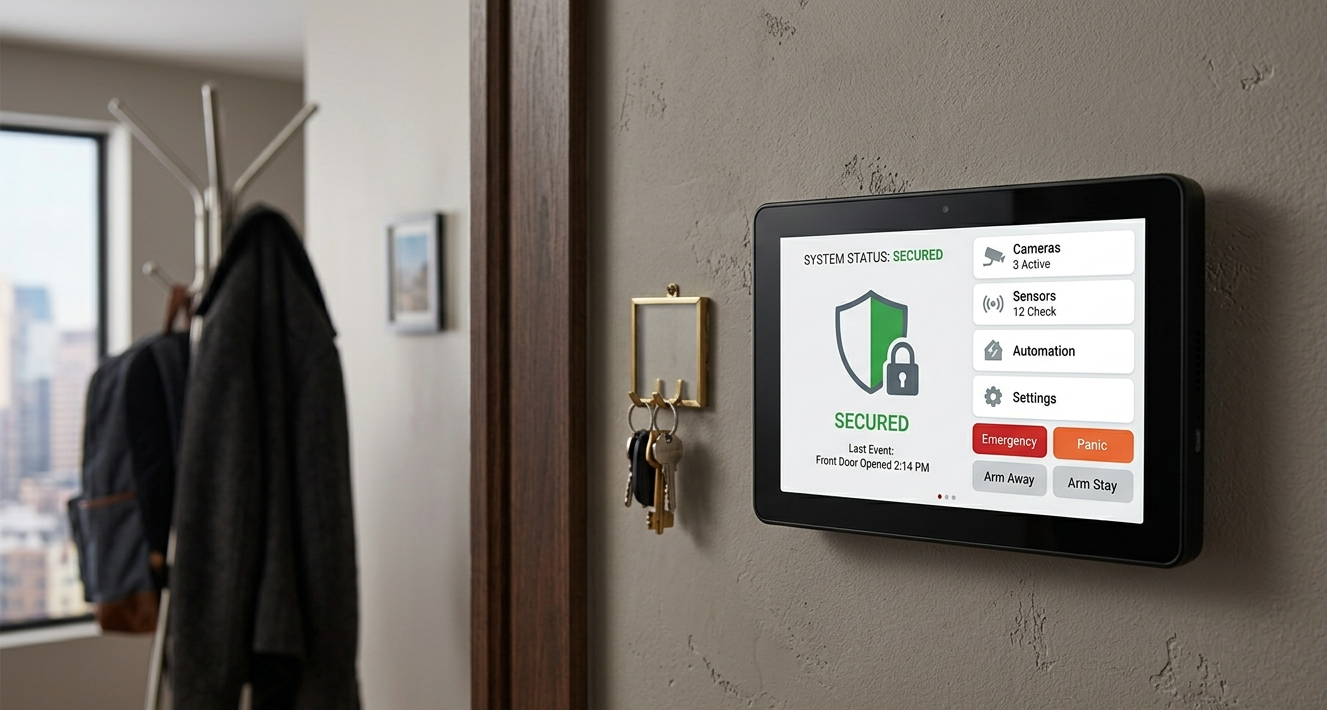
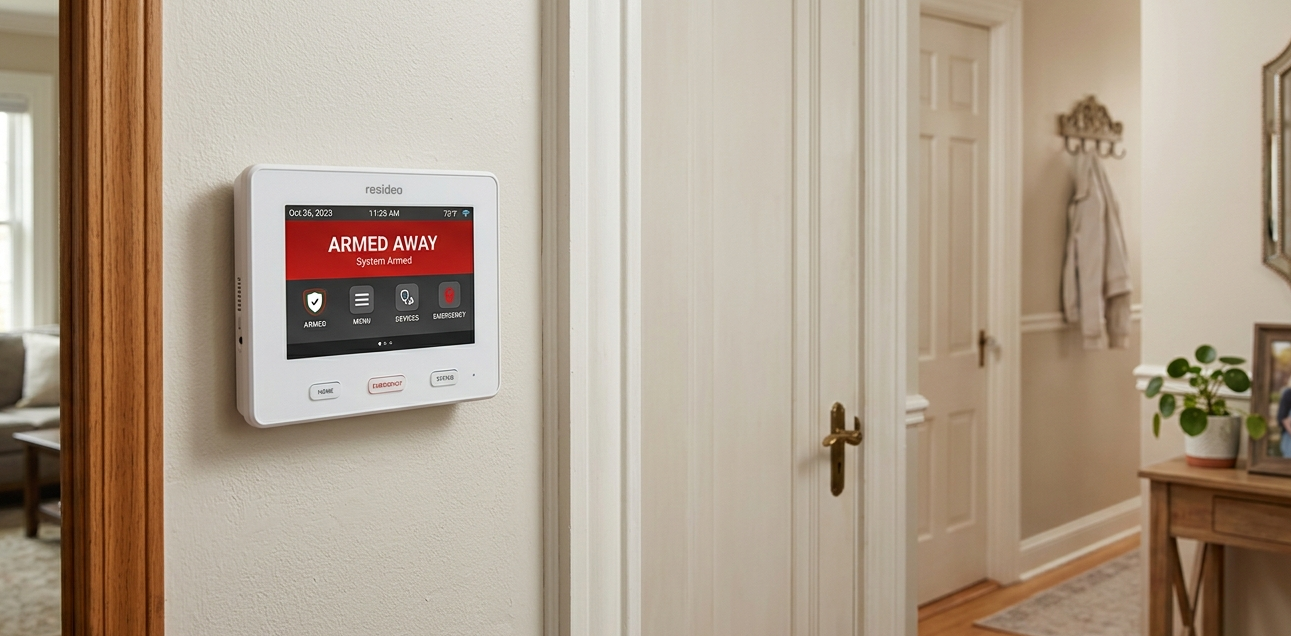
The control panel is the central processor of your alarm system. Every sensor reports to it; every alarm decision happens here. Modern systems use a touchscreen panel (think of it as a wall-mounted tablet), while older systems use button-based keypads.
What to look for:
- Wireless connectivity (WiFi at minimum, cellular backup ideally)
- Battery backup of at least 24 hours
- Tamper protection — the panel itself should trigger if someone tries to disable it
- App control — you should be able to arm/disarm from your phone
- Two-way voice with monitoring service (the panel can speak to the dispatcher)
Red flags:
- Panels that only connect via landline (obsolete and easily cut)
- Panels without battery backup (one power outage = unprotected home)
- Proprietary panels you can’t replace without changing your whole system
2. Sensors — the senses
Sensors are how the system perceives intrusion. There are five common types:
Door/window contact sensors — Two-part magnetic sensors. One half mounts to the door frame, the other to the door itself. When the door opens, the magnetic field breaks, the sensor reports the breach. The most common and most reliable sensor type.
Motion sensors — Passive infrared (PIR) sensors that detect movement and body heat. Cover larger areas than contact sensors but generate more false alarms (pets, sunlight through windows, HVAC drafts).
Glass break sensors — Microphones tuned to the frequency of breaking glass. Cover an entire room with one sensor, but can false-alarm on similar sounds (breaking dishes, certain TV audio).
Smoke and CO detectors — Often integrated into modern systems. Trigger a monitoring response for fire as well as intrusion.
Environmental sensors — Water leak sensors, freeze sensors, gas detectors. Not “alarm” sensors in the burglar sense, but most modern systems integrate them.
→ For deep dives on individual sensor reviews, see our smart locks and alarms category.
3. Sounders — the voice
To detect if an unwanted burglar comes visit your home or office after hours or on weekends, you probably want a burglary system set up. These systems been around for a long time and normally tied into a land line phone system which would call out to a monitoring station which then would call you.
Nowadays, monitoring of a alarm system can be wireless or through a cellular system which is more secure in case someone wants to cut your outside phone line. Burglar alarm systems typically operate on a simple principle: They get activated with a code or card and from then on every time someone comes through the door and does not de-activate the alarm in time sets off a large scale alarm. The system consists of below:
– Glass Break Sensor
Glass break sensors alert you when someone has broken in through a window. They are either wireless or wired and tied to your panel.
– Motion Sensor
These are an essential part of any home security system. They have a wide variety of uses: turning on indoor and outdoor lights, activating cameras, setting off alarms, and more. For this reason, they are often incorporated into other home alarm system equipment.
-Door Alarm
With a dizzying array of door alarms available in the market, it can be highly challenging to choose one that suits your security needs. In this article, we’ve broken down the various types of door alarms, and explained how each type can best serve a specific security need. We’ve also included the latest features of door alarms so you are most up to date with the developments in this area.
-Contact Sensor
These can detect when the door or window they are attached to opens. These devices use two sensors: one on the door or window, and one on the frame. When the door is closed, the two sensors form a closed circuit. When the door is opened, the circuit breaks, triggering a burglar alarm or text alert.
-Yard Signs and Window Stickers
One burglar alarm part that might be easily overlooked is the signage that comes with it. You might not think these are all that important, but the presence of these signs and window stickers can deter would-be burglars from entering a home. Make sure to display your signs prominently!
-Smoke Detectors
Most homes have smoke detectors installed, but if you need to install your own, you can get one as part of a comprehensive home security system. If you’re looking to upgrade, there are also smart smoke detectors that speak alerts out loud, letting you know what room the smoke is coming from.
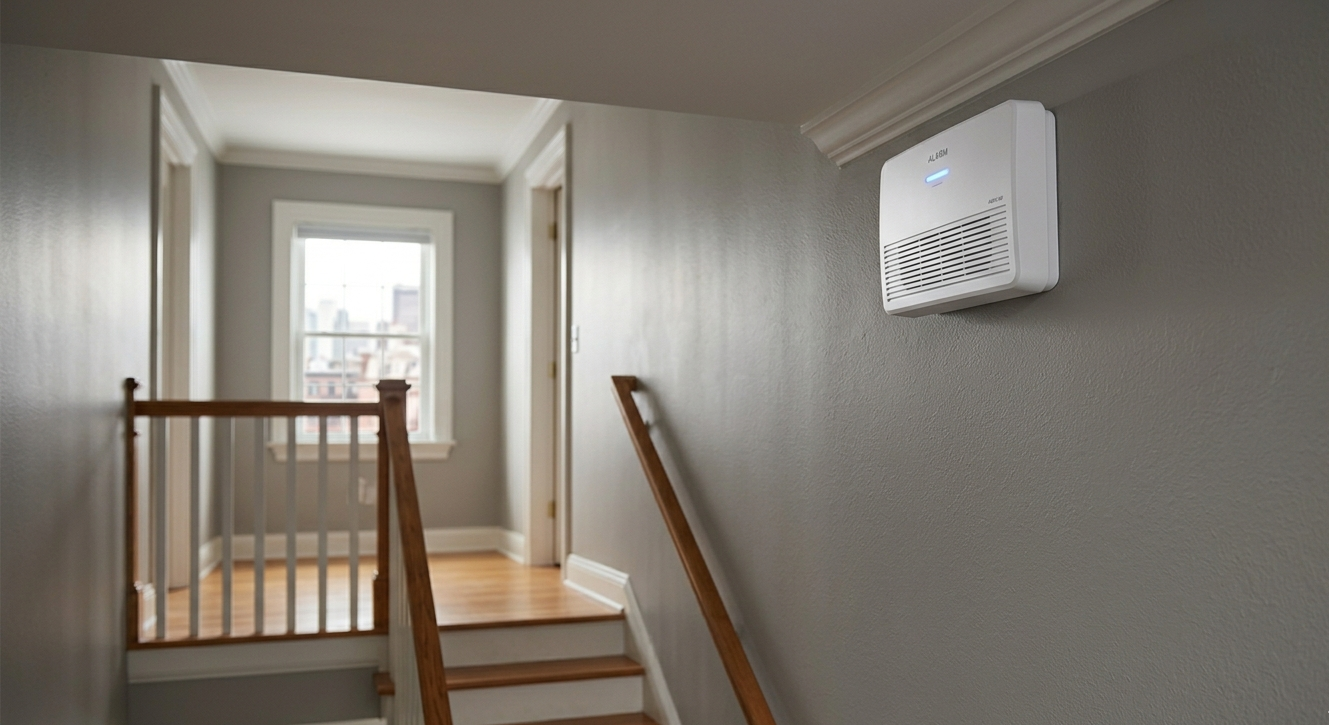
When a sensor triggers, the sounder makes the alarm audible. Indoor sirens are 85–110 dB; outdoor sirens go up to 120 dB. Beyond just being loud, sounders serve three purposes:
- Scare off the intruder (most burglars run within 30 seconds of an audible alarm)
- Alert occupants so they can respond
- Alert neighbors who may call police
What to look for: Both indoor and outdoor sounders. Outdoor sirens are critical because burglars don’t always hear indoor alarms from outside the house, and neighbors definitely don’t.
4. Communication system — the link to outside
The system needs a way to talk to the monitoring service (if you have one) and your phone. Options:
- Cellular (best — can’t be cut, doesn’t depend on internet)
- WiFi/broadband (good for app notifications, vulnerable to internet outages)
- Landline (obsolete — easily cut from outside)
Modern systems use cellular as primary with WiFi as backup. Avoid any system that’s WiFi-only unless you have whole-home backup power and a cellular-backed router.
5. Power supply and backup
Standard wall power runs the system day-to-day. But a power outage — natural or deliberately caused by an intruder — needs to be handled. Look for:
- Battery backup of 24+ hours on the control panel
- Battery-powered sensors that last 3–5 years on a single cell
- Cellular communication so the system reports through a power outage
6. Monitoring service (optional but important)
A monitored system means a 24/7 dispatch center is notified when your alarm triggers. They:
- Verify the alarm (call you to confirm it’s real)
- Dispatch police, fire, or medical
- Provide a recorded audit trail (important for insurance claims)
Monitored vs. self-monitored is a real choice. Monitored systems cost $20–60/month but get professional response within seconds. Self-monitored systems (like base SimpliSafe or DIY Ring Alarm) save the monthly fee but require you to call 911 after seeing a notification — which doesn’t work if you’re not looking at your phone.

For most families, monitored service is worth it but the right answer depends on your situation.
Putting it all together: a basic vs. complete system
Basic alarm system (DIY, ~$300):
- 1 control panel
- 4 door/window sensors (front, back, side door, master bedroom window)
- 1 motion sensor (main hallway)
- 1 indoor siren
- WiFi + battery backup
- Self-monitored
Complete alarm system (DIY or pro, ~$800–1,500):
- 1 control panel with cellular backup
- 8+ door/window sensors (all entry points + master bedroom)
- 2–3 motion sensors (living areas + hallway)
- 1 glass break sensor (living room with large windows)
- 1 indoor + 1 outdoor siren
- 2 smoke/CO detectors
- Monitored service
What to look for when shopping-
Three questions to ask of any alarm system you’re considering:
- Does it have cellular backup? WiFi-only is a no.
- Can I expand it? Locked-in proprietary systems that won’t accept third-party sensors will cost you later.
- What’s the monthly cost and is it required? Some brands force you into multi-year contracts. Avoid those when possible.
→ Want product-specific recommendations? See my layered defense guide for the alarm system I actually use in my own home and the two alternatives I recommend at different price points.
Related reading:
- Wired vs. Wireless Security Cameras — How cameras integrate with alarm systems
- What Does It Mean to Defend Against Intruders? — Where alarms fit in the four-layer framework