
When most people picture “defending against intruders,” they think of one thing: a homeowner with a gun confronting a burglar in a hallway at 3 AM. That mental image is dramatic, it’s what TV shows you, and it’s almost entirely wrong about how real home defense works.
Real defense against intruders isn’t a single moment of confrontation. It’s a system of layers that starts hours before any intruder thinks about your house and ends — ideally — without you ever having to confront anyone.
This page explains what “defending against intruders” actually means in 2026, the four-layer framework that real security professionals use, and how to start building yours today.
The wrong definition (and why it gets people hurt)
The popular definition of home defense is reactive: something happens, you respond. The intruder breaks in, you grab a firearm, you confront them, you “defend” yourself.
This definition fails for three reasons:
It assumes you’ll be awake and ready. Most home invasions happen between 10 AM and 3 PM on weekdays, when burglars assume nobody’s home. The next-most-common window is between 1 AM and 4 AM, when you’re asleep and disoriented. In neither case are you “ready” to react.
It assumes the threat is one person you can see. Real intrusions are often two or three people, often armed, often moving fast. The mental movie of “homeowner vs. one burglar” doesn’t match the actual data.
It puts all your eggs in one basket. If your entire defense plan depends on one tool — usually a firearm — and you can’t reach it, can’t see well enough to use it, or freeze under stress (which is normal and happens to trained shooters), you have no plan.
The real definition: layered defense
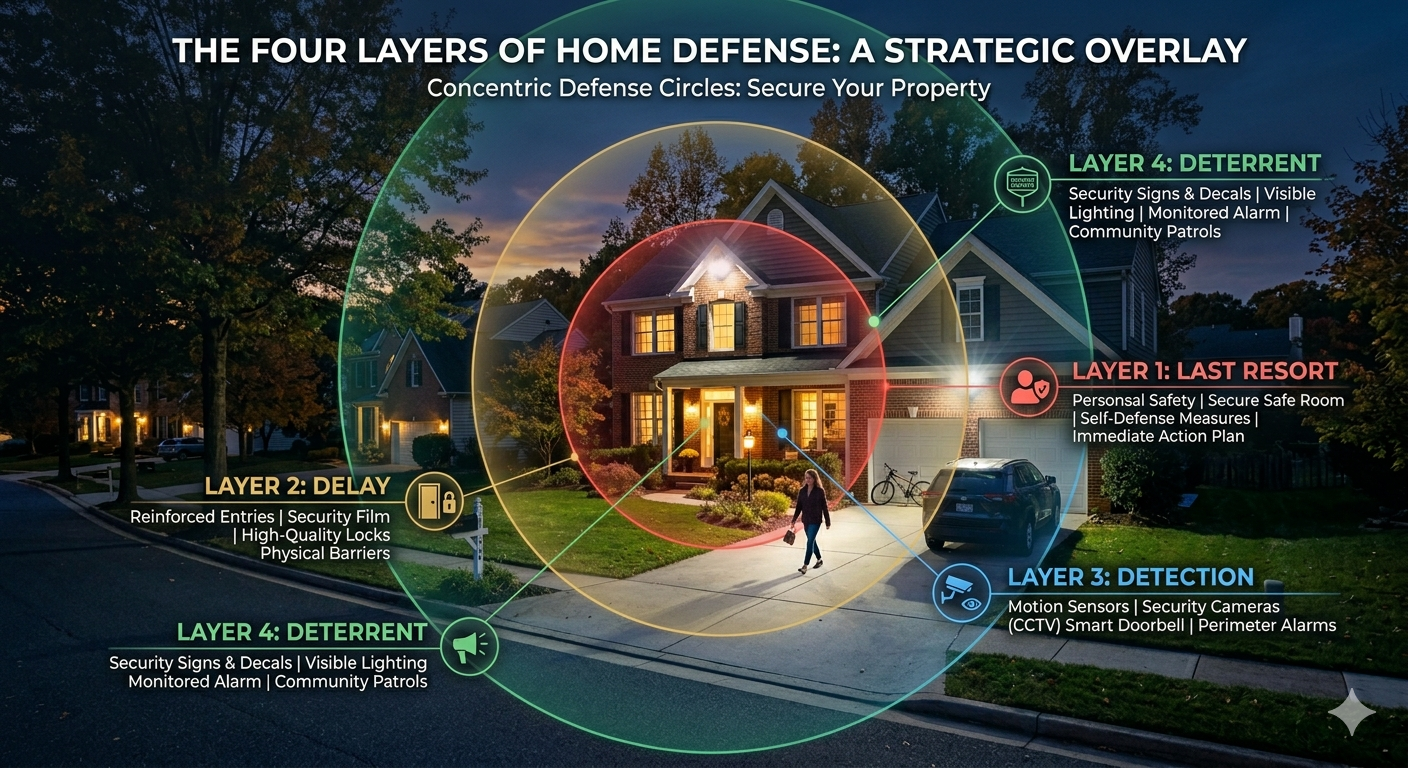
Defending against intruders means making your home a harder target than the next house on the block — and doing it across four layers that don’t depend on each other.
Here’s the framework:
Layer 1: Detection
You can’t defend against a threat you don’t know is there. Detection includes:
- Doorbell cameras that record and notify before someone reaches your door
- Outdoor security cameras covering blind spots — side yards, back doors, garages
- Motion-activated lights that turn on before someone reaches your house
- Driveway alarms that alert you to vehicles or people approaching from the street
- Window/door sensors that trigger when entry is attempted
Detection buys you the most valuable resource in any defensive scenario: time and information. A camera that lets you see what’s at your door before you open it is worth more than a gun on your hip.
→ See our home security camera reviews for tested products in this layer.
Layer 2: Delay
The single best statistic in home security: the average burglar gives up after 30–60 seconds of resistance. They’re not committed; they’re opportunists looking for easy targets. Delay layer products buy you those critical seconds:
- Reinforced strike plates with 3-inch screws (most door frames fail because the original screws are 1 inch)
- Door barricade bars for primary doors at night
- Security film for windows and sliding glass doors
- Quality deadbolts and smart locks — not the $20 ones from a big-box store
- Window locks beyond the factory-default ones
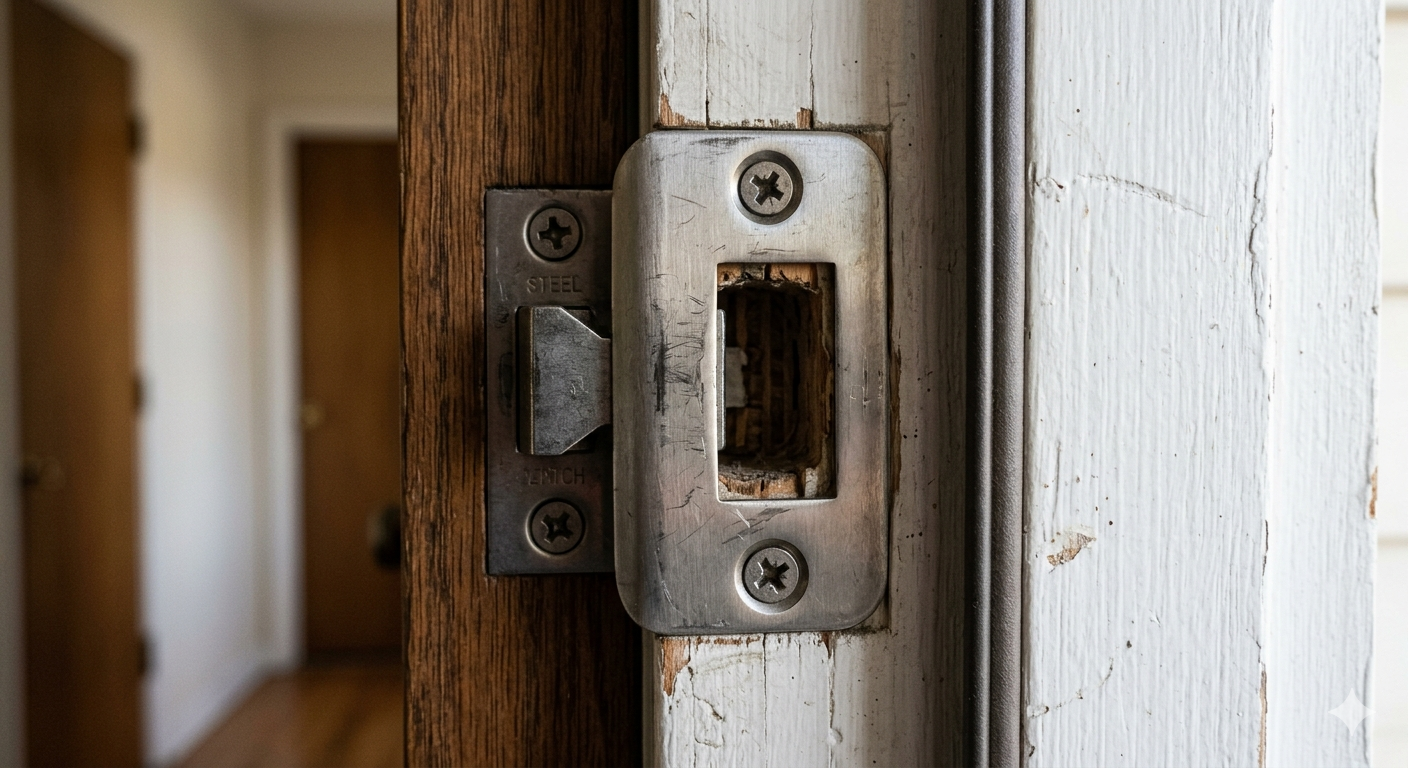
A reinforced front door doesn’t stop a determined attacker forever. But it gives you 30 seconds to do everything else — call 911, get to your kids, retrieve a firearm, get to a safe room.
→ See our smart locks and alarms guide for products that build this layer.
Layer 3: Deterrent (non-lethal)
The deterrent layer is the most misunderstood and most underused. These are tools you can deploy before lethal force becomes necessary:
- Pepper spray (Sabre, Fox Labs) effective, legal in all 50 states, no permit needed
- Byrna launchers (Byrna SD, Byrna LE) CO2-powered, fire kinetic or chemical projectiles, no firearms license required in most states
- Alarm systems with monitored response — the audible alarm alone ends most intrusions
- Stun guns and tasers (state laws vary — check yours)
- A loud dog (the most cost-effective deterrent ever invented)
Deterrents matter because most defensive situations don’t require lethal force, and using lethal force when non-lethal would have worked creates legal liability you don’t want.
→ Our non-lethal defense category covers these tools in depth.
Layer 4: Last resort
This is the layer most people think is home defense. It’s actually the smallest, used least often, and most legally consequential:
- A firearm you’ve trained with (untrained firearms in defensive situations create more problems than they solve)
- A safe room with reinforced door and pre-positioned phone
- A defensive plan for where family members go and what they do
- Concealed carry insurance (USCCA, US LawShield, CCW Safe) for after-action legal protection
Firearms in home defense work — but only when they’re the fourth layer, not the first. A firearm without detection, delay, and deterrent layers in front of it puts you in close-range confrontations you should never have to be in.
→ See our 2A and firearms news section for legal updates and firearm-related home defense content.
What “defending against intruders” actually means
It means: building a system where the intruder gives up at layer 2 and never reaches you at layer 4.
It means knowing that detection bought you the time, delay bought you the space, deterrent gave you options, and the firearm was the safety net you hoped never to use.
It means treating home defense like an engineer, not like a movie hero.

What to do next
If you’re starting from scratch and feeling overwhelmed, do these three things in order:
- Audit your current layers. Walk around your house. Count what you have in each of the four categories above. Most homeowners have only one or two layers — usually some cameras and a deadbolt. Knowing where you’re thin is step one.
- Build the cheapest layer first. Reinforced strike plates with 3-inch screws cost $15 and take 20 minutes to install. They’re the highest ROI home defense upgrade you can make. Detection layer additions like doorbell cameras and motion lights are next.
- Don’t skip to layer 4. I see homeowners buy a $700 pistol before they’ve spent $15 on a strike plate. Reverse that order. The pistol matters, but it matters last.
→ Ready to build your layers? See my complete layered home defense guide with my actual product recommendations at each layer, including the ones I trust with my own family.
Related reading:
- What Consists of an Alarm System? — Deep dive into Layer 1 detection
- Wired vs. Wireless Security Cameras — Choosing the right detection tools
- When to Choose Between Non-Lethal and Lethal Firearms — The deterrent vs. last-resort decision