Disclosure: This post contains affiliate links. See our full disclosure.
Updated May 2026. Originally published 2018.
Security camera technology has changed dramatically since this article was first written. In 2018, 1080p was considered high-definition and 4K was expensive and rare. In 2026, 4K cameras are mainstream, AI-powered detection is standard in mid-range systems, and a new category — Starlight sensors for true-color night vision has become accessible to homeowners.
This complete guide explains every type of security camera system, what each is good for, and which products represent the best options in each category in 2026.
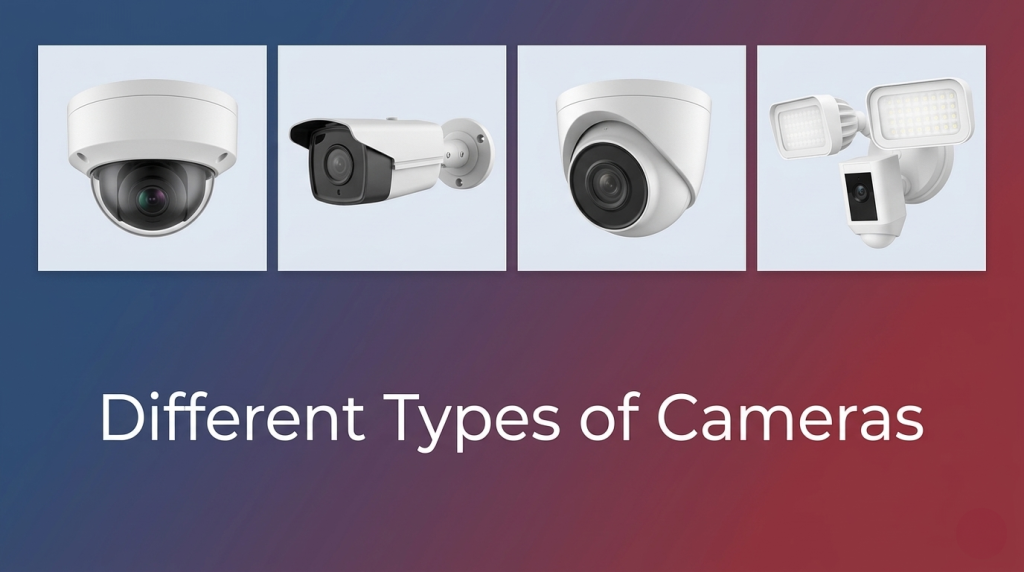
The Two Fundamental Categories: Wired vs. Wireless
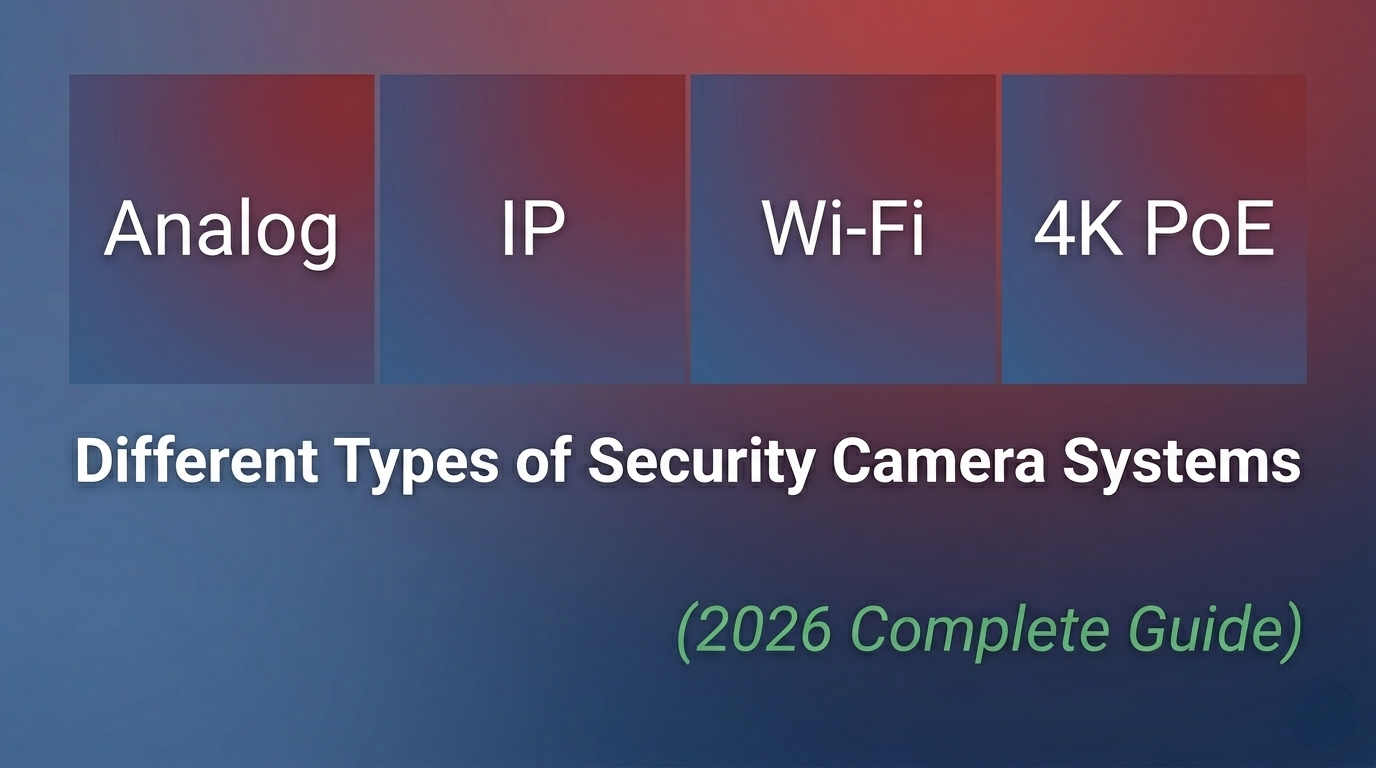
Before getting into specific camera types, understand the foundational split. Every security camera system is either wired (continuous power and data via cable) or wireless (battery or solar powered, transmits over Wi-Fi).
Wired systems- More reliable, higher resolution possible, continuous recording, no battery maintenance. These systems require cable installation and best for permanent installations.
Wireless systems- Flexible placement, easier installation, battery or solar powered. These systems are dependent on Wi-Fi reliability and are best for renters, temporary installations, or locations without power access.
Most homes benefit from both — wired for primary entry points, wireless for supplementary positions.
Type 1: Analog / CCTV (DVR-Based) Systems
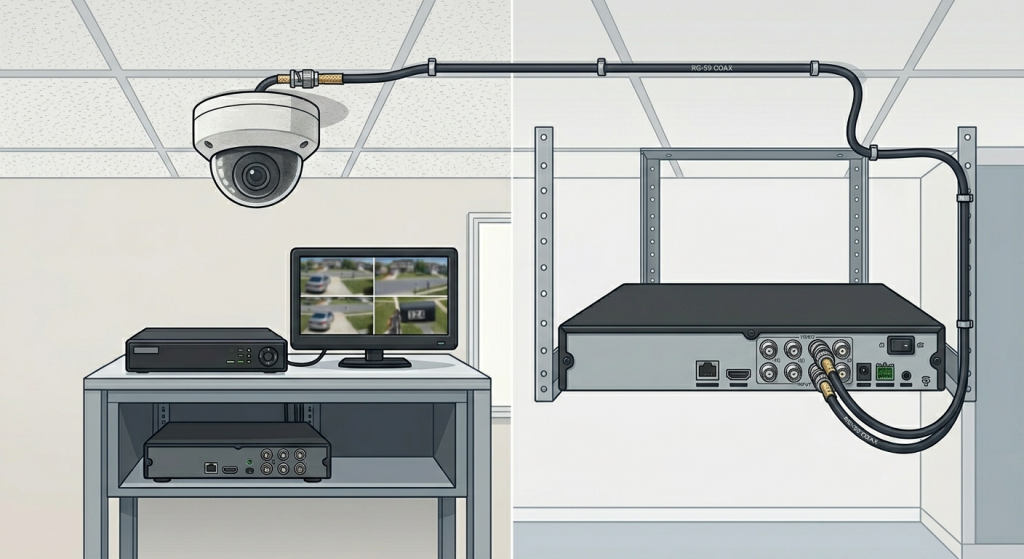
Analog cameras use coaxial cable to send video to a DVR (Digital Video Recorder). This technology has existed since the 1990s and is still widely used, primarily in commercial installations and older home systems.
How they work- Cameras connect via coaxial (RG59 or RG6) cable to a central DVR. The DVR records footage to a hard drive and allows local playback. Remote access requires port-forwarding your router, which is a security risk if not properly configured.
2026 reality- Analog is outdated for new residential installations. Maximum resolution caps at ~4MP even with modern “HD-TVI” or “AHD” systems. If you have an existing analog/DVR system and are asking whether to upgrade then yes, upgrade to an IP/NVR system.
Who still uses it?- Businesses replacing existing analog infrastructure, very low-budget installations where existing coax cabling can be reused.
Representative product (analog, budget)- Amcrest 1080p DVR system
https://www.amazon.com/s?k=Amcrest+analog+DVR+1080p
Type 2: IP Cameras (NVR-Based / PoE Systems)
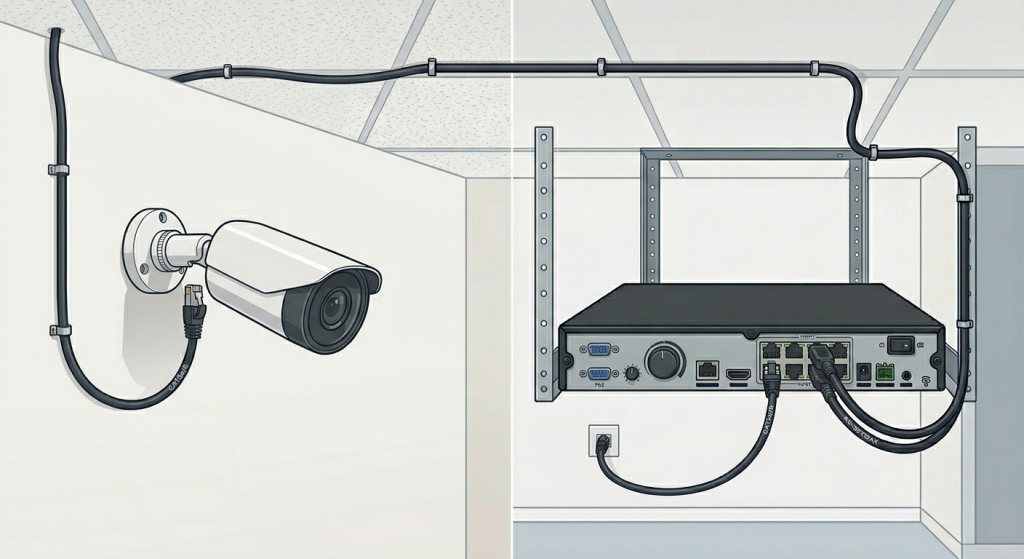
IP cameras are the modern standard for serious home and business security. They transmit video data as digital files over an Ethernet network to an NVR (Network Video Recorder).
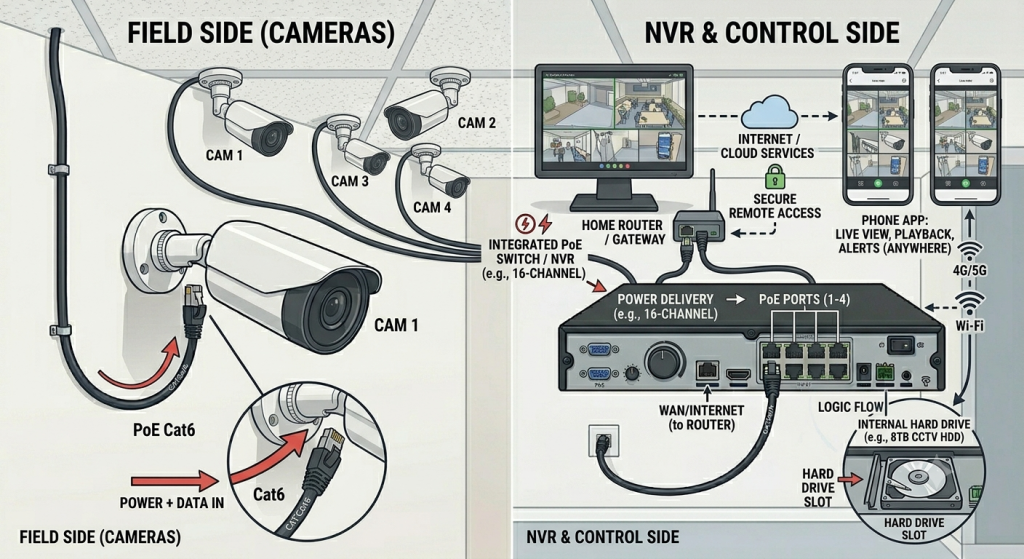
How they work- Each IP camera connects via a single Cat5e/Cat6 Ethernet cable to either a PoE NVR (which powers and records all cameras) or a PoE network switch connected to a separate NVR. One cable per camera handles both power and data.
Why PoE IP systems dominate in 2026:
- Resolution: 4K (8MP) is now the standard in mid-range systems. 4K resolution is now standard in the best PoE security camera systems of 2026.
- Reliability: Wired connection can’t drop out like Wi-Fi
- Continuous recording: Record 24/7 to a local hard drive with no subscription
- AI detection: Person and vehicle detection built into camera hardware or NVR with no cloud subscription required
- Scalability: Start with 4 cameras, expand to 8 or 16 on the same NVR
The 2026 top picks in this category:
Best overall value — Reolink RLK8-800B4: The Reolink system is a top choice for a PoE security camera system, offering excellent image quality, smart person and vehicle detection, and easy PoE installation. Its user-friendly mobile app and expandability make it ideal for homeowners seeking a reliable, feature-rich security solution without a hefty price tag.
Amazon: https://www.amazon.com/s?k=Reolink+RLK8-800B4+4K+PoE
Best app and AI — Lorex Fusion 4K: Lorex Fusion pairs a premium NVR with smart person and vehicle detection on every channel. The Lorex Home app is arguably the nicest surveillance app on any platform, with multi-site support and free push notifications.
Amazon: https://www.amazon.com/s?k=Lorex+Fusion+4K+NVR+PoE
Budget 4K — Amcrest 4K PoE: Best for buyers who want 4K PoE at the lowest possible cost without sacrificing the core features.
Amazon: https://www.amazon.com/s?k=Amcrest+4K+PoE+security+camera+system
Type 3: Wi-Fi Cameras (Cloud-Based Systems)
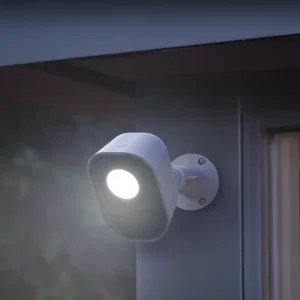
Wi-Fi cameras transmit video wirelessly to the cloud (or optionally to a local hub). They require only a power outlet or battery and no network cable.
How they work- The cameras connect to your home Wi-Fi and the real time video clips upload to the manufacturer’s cloud when motion is detected. Most require a subscription to store and retrieve clips.
2026 landscape:
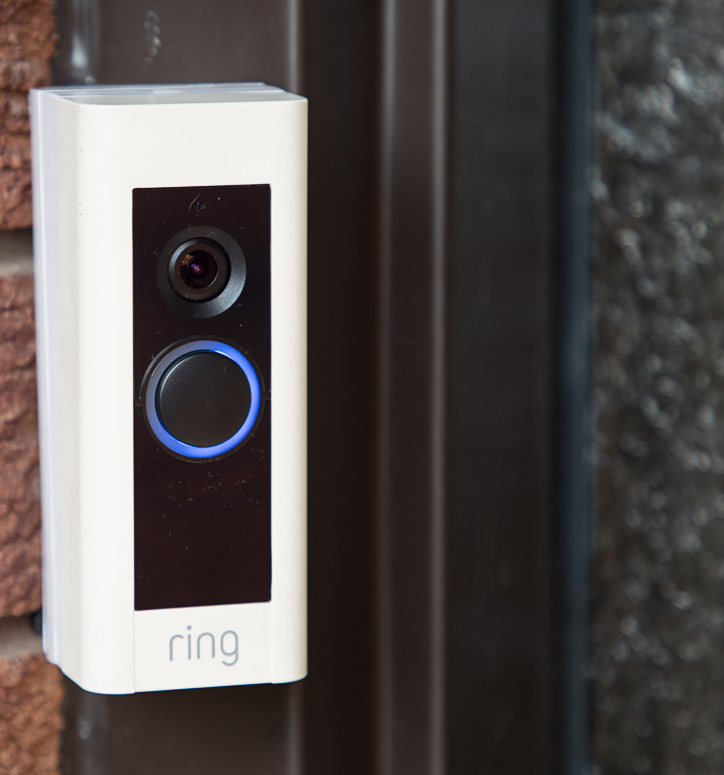
The major Wi-Fi camera brands in 2026 are Ring (Amazon), Nest (Google), Arlo, Eufy, Wyze, and Blink. Each is a closed ecosystem so cameras from one brand generally don’t work with another brand’s hub or app.
Key trade-offs in 2026:
| Consideration | Reality |
|---|---|
| Resolution | Most Wi-Fi cameras are 1080p-2K. 4K Wi-Fi cameras exist but battery drain is severe. |
| Subscription | Ring, Arlo, and Nest all require paid subscriptions for full functionality. Eufy and Wyze offer meaningful free tiers. |
| Reliability | Dependent on Wi-Fi. In congested networks, cameras can drop offline. |
| Privacy | Cloud storage means your footage is on a third-party server. |
| Flexibility | Battery cameras go anywhere — doors, windows, fences, sheds. |
Best no-subscription option — Eufy cameras: Eufy offers local storage on-device and a more useful free tier than Ring or Nest.
Amazon: https://www.amazon.com/s?k=Eufy+security+camera+outdoor
Best ecosystem for Alexa households — Ring: Amazon: https://www.amazon.com/s?k=Ring+Stick+Up+Cam+4K
Type 4: Cellular Security Cameras
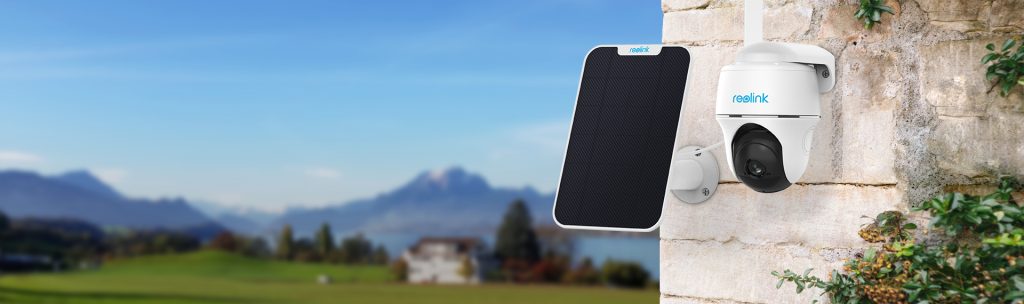
Cellular cameras transmit footage over 4G LTE (and now 5G) instead of Wi-Fi. They run on battery or solar, with no power or internet connection needed at the installation site.
Best use cases in 2026:
- Detached garages or barns without power
- Rural properties, gates, and perimeter fencing
- Construction sites and remote monitoring
- Vacation homes during off-seasons
Limitation: Cellular data plans cost $5-15/month per camera. Not cost-effective for primary home coverage, but genuinely useful for locations where Wi-Fi and power don’t reach.
Top pick — Reolink Go Series (4G LTE): Amazon: https://www.amazon.com/s?k=Reolink+Go+4G+LTE+security+camera
Type 5: Starlight Cameras (Color in True Darkness)
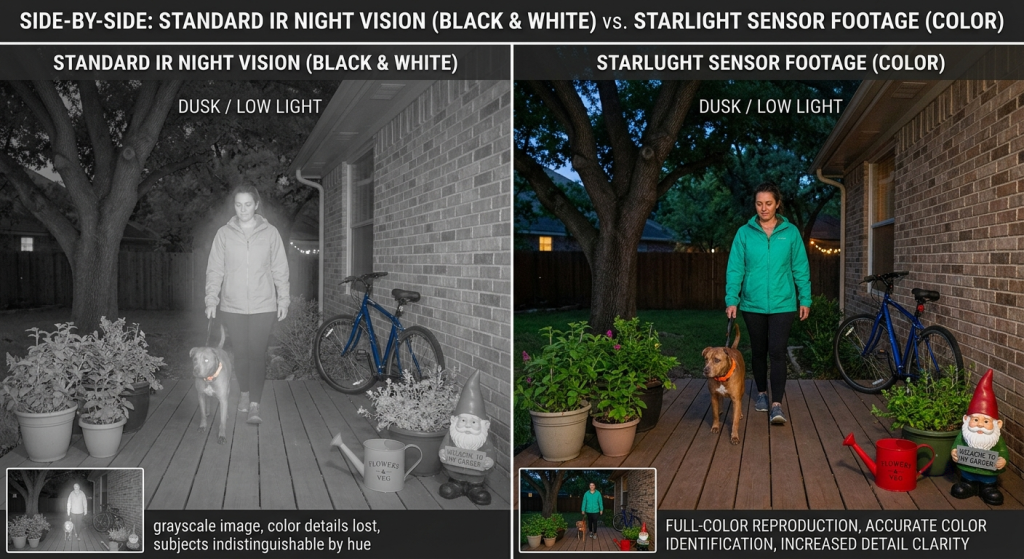
Starlight is a sensor technology (originally Sony’s term, now used generically) that enables color video in near-total darkness and not by turning on a spotlight, but by capturing the tiny amount of ambient light present in any real-world environment.
Why this matters for home defense: Standard IR night vision shows you shapes in black and white. Starlight shows you the color of a vehicle, the color of clothing, distinguishing facial features. In a home invasion situation, that footage is far more useful for identification.
2026 availability: Starlight sensors are standard in mid-range PoE cameras from Reolink, Lorex, and Hikvision. They’re also appearing in higher-end Wi-Fi cameras from Arlo Pro 5S and 6th gen.
What to look for when buying: In product descriptions, look for: “Starlight,” “ColorVu” (Hikvision’s brand name), “Full-Color” (Dahua’s name), or “color night vision without spotlight.” These all describe the same capability.
Top picks with true Starlight color night vision-
Reolink RLC-810A (4K with Starlight): Amazon: https://www.amazon.com/s?k=Reolink+RLC-810A+4K+color+night+vision
Lorex 4K ColorNight (Lorex’s Starlight equivalent): Amazon: https://www.amazon.com/s?k=Lorex+4K+color+night+vision+outdoor+camera
Type 6: PTZ Cameras (Pan-Tilt-Zoom)
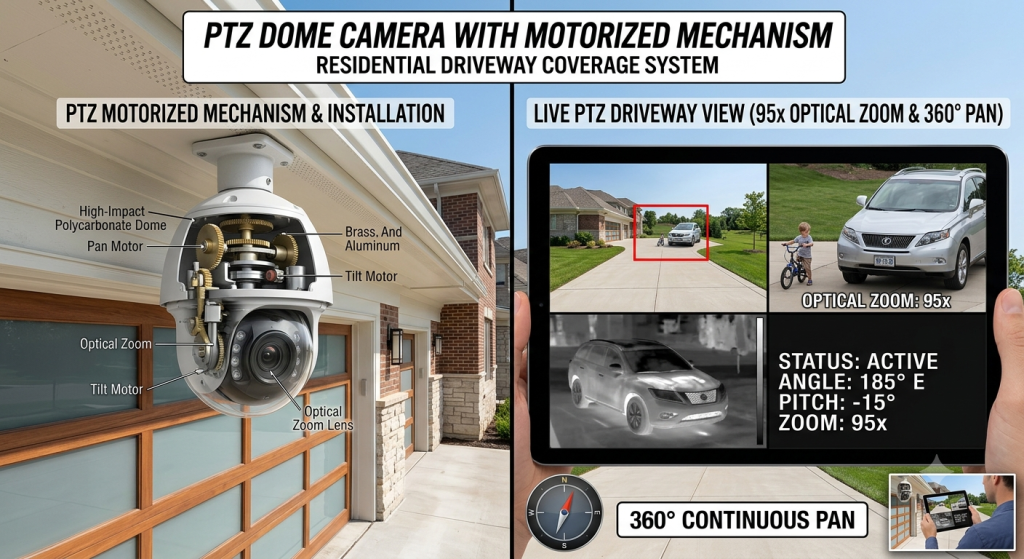
PTZ cameras can rotate horizontally (pan), tilt vertically, and zoom optically. They’re controlled remotely via app or can auto-track moving subjects.
2026 home use cases:
- Large driveways or properties needing wide coverage from a single camera
- Monitoring areas where the subject’s position is unpredictable (a large backyard)
- Supplementing a fixed-camera system with a flexible camera for investigation
Limitation: PTZ cameras typically cost $200-500 for quality residential models. One PTZ at a strategic location often replaces two or three fixed cameras.
Top pick — Reolink 4K Outdoor PTZ: Amazon: https://www.amazon.com/s?k=Reolink+4K+PTZ+outdoor+camera
Which System Is Right for You? The Decision Matrix
| Your situation | Best choice |
|---|---|
| Renter, can’t run cables | Wi-Fi cameras (Eufy, Ring, Blink) |
| Own your home, want best quality | 4K PoE NVR system (Reolink, Lorex, Amcrest) |
| No subscription fees ever | PoE NVR with local storage OR Eufy with SD card |
| Rural property without power or Wi-Fi | Cellular cameras (Reolink Go) |
| Best color in total darkness | Starlight PoE cameras |
| One camera, large area | PTZ camera |
| Already have coax cables, tight budget | Analog/DVR (last resort — upgrade path exists) |
The 2026 Bottom Line
The single most impactful upgrade in 2026 for someone still running a 1080p or analog system from 5+ years ago: a 4-camera 4K PoE NVR system from Reolink, Lorex, or Amcrest. Top-rated brands include Reolink, Lorex, and Amcrest. Reolink is popular for home users due to ease of use and affordability. Lorex offers more advanced features. Amcrest is known for versatility and smart integrations.
All three now offer 4K cameras with Starlight color night vision, AI person/vehicle detection, and local NVR storage — no subscription required — for $400-800 for a 4-camera system. That was enterprise-level performance 5 years ago.
Building Your Layered Defense?
This product is part of your Detection Layer — but one camera or one doorbell isn’t a complete defense plan. Real layered home defense means four layers working together: Detection, Delay, Deterrent, and Last Resort.
I’ve built a free guide that lists every product I’d actually buy at each layer — with honest prices and what to skip.
See My Complete Layered Defense Guide →Free · No email required · Updated 2026